
AMERICAN BACKYARD
PATIO TRASERO AMERICANO
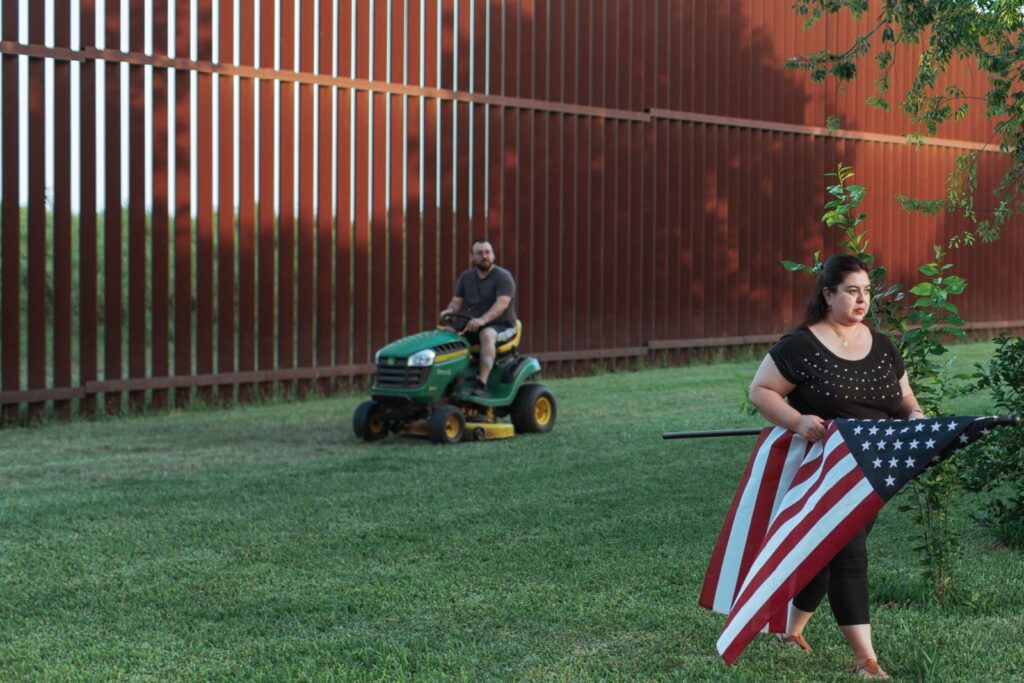
“I don’t have a backyard, I have a border fence,” Melissa Solis tells us on a warm spring evening while picking grapefruit off her fruit tree. She and her husband Tony live in a modest single-family ranch style home on a quiet rural stretch east of Brownsville, Texas.
Tony y Melissa Solis, South Point, TX
“No tengo un patio trasero, tengo una valla fronteriza”, nos dice Melissa Solís en una cálida tarde de primavera mientras recogía pomelo de su árbol frutal. Ella y su esposo Tony viven en una modesta casa estilo rancho unifamiliar en un tranquila zon rural al este de Brownsville, Texas.
Among many, many other things, the post-election political climate of 2017 offered a stark context for confronting cultural differences within the U.S. In many ways a crucible, it suddenly brought into high focus the integrating and fragmenting processes that bind this country together–and then divide it again, to form new ideological patterns, or lapse back to old ones. The U.S.-Mexico border is one such facet of the revolving national psyche that tends to resurface at fashionable times for nationalism, isolationism, and xenophobia.
Through a blend of portraiture and topographical studies of infrastructure imposed on the landscape, American Backyard looks at the found reality of American lives on the border through the voices of those that occupy these spaces. Various cultural and political processes, which may be ambiguous elsewhere in the country, are amplified at the border. In an environment where the movement of both people and goods are vigilantly regulated, examined, and controlled—and where federal laws regularly don’t apply—questions of social injustice and discrimination are matters of resounding consequence. Beyond talk of The Wall, there is a larger, less transparent story to be told about our Borderlands to do with acculturation, surveillance, diversity and compassion.
Entre muchas, muchas otras cosas, el clima político postelectoral de 2017 ofreció un contexto claro para enfrentar la diferencia cultural dentro de los EE. UU. En muchos aspectos fue un crisol, de repente enfatizó los procesos integradores y fragmentadores que unen a este país: para luego dividirlo nuevamente, para formar nuevos patrones ideológicos, o volver a los antiguos. La frontera entre Estados Unidos y México es una de las facetas de la conciencia nacional rotatoria que tiende a resurgir en los tiempos de moda para el nacionalismo, el aislacionismo y la xenofobia.
A través de una combinación de retratos y estudios topográficos de la infraestructura impuesta en el paisaje, American Backyard analiza la realidad de las vidas estadounidenses en la frontera a través de las voces de quienes ocupan esos espacios. Varios procesos culturales y políticos, que pueden ser ambiguos en otras partes del país, se amplifican en la frontera. En un entorno en el que el movimiento de personas y bienes se regula, examina y controla de forma vigilante y donde las leyes federales no se aplican con regularidad, las cuestiones de injusticia social y discriminación son importantes. Más allá de hablar de El Muro, hay una historia más grande y menos transparente que contar acerca de nuestras tierras fronterizas que tiene que ver con la aculturación, la vigilancia, la diversidad y la compasión.
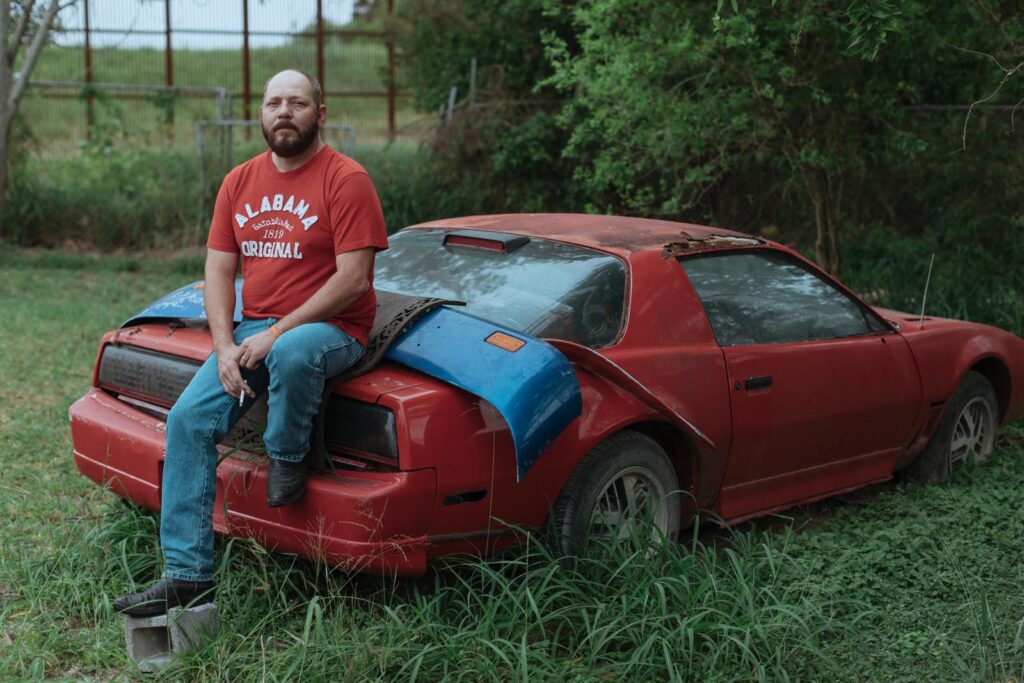
Ralph Luna, Brownsville, TX
Ralph Luna would have voted for Trump in 2016 if he hadn’t been convicted of a felony. He didn’t tell us about the crime and we didn’t ask. He’d rather be known as a father of eight, a Trump guy, an ex-oil worker and a veteran long-haul truck driver who has a t-shirt from every state except Hawaii. When we asked Ralph where his strong approval for Trump came from, his first response was the border wall — the one running along the back of his South Texas property. “C.Y.A.” Ralph explained, summing up Trump’s immigration policy in one acronym: “Cover Your Ass.” He felt increased border security was a good idea for many reasons. “I used to see a lot of people coming to work in the fields. Now it’s cartels, drugs…a lot of people get food stamps and don’t work, even the Mexicans. I know at least a hundred people that do that. They don’t work – they work the system.”
Photograph by Elliot Ross, text by Genevieve Allison
Ralph Luna, Brownsville, TX
Ralph Luna habría votado por Trump en 2016 si no hubiera sido condenado por un delito grave. No nos contó sobre el crimen y nosotros tampoco preguntamos. Preferiría ser conocido como padre de ocho hijos, un tipo de Trump, un ex trabajador petrolero y un veterano conductor de camiones de larga distancia, que tiene una camiseta de todos los estados excepto de Hawai. Cuando le preguntamos a Ralph de dónde venía su fuerte aprobación hacia Trump, su primera respuesta fue el muro fronterizo, el que se extiende a lo largo de la parte trasera de su propiedad en el sur de Texas. “C.Y.A.” Ralph explicó, resumiendo la política de inmigración de Trump en un acrónimo: “Cúbrete el culo”. Sintió que el aumento de la seguridad fronteriza era una buena idea por muchas razones. “Yo solía ver a mucha gente venir a trabajar al campo. Ahora son carteles, drogas … mucha gente recibe cupones de alimentos y no trabajan, incluso los mexicanos. Conozco al menos un centenar de personas que hacen eso. Ellos no trabajan, ellos trabajan el sistema “.
Fotografía de Elliot Ross, texto de Genevieve Allison
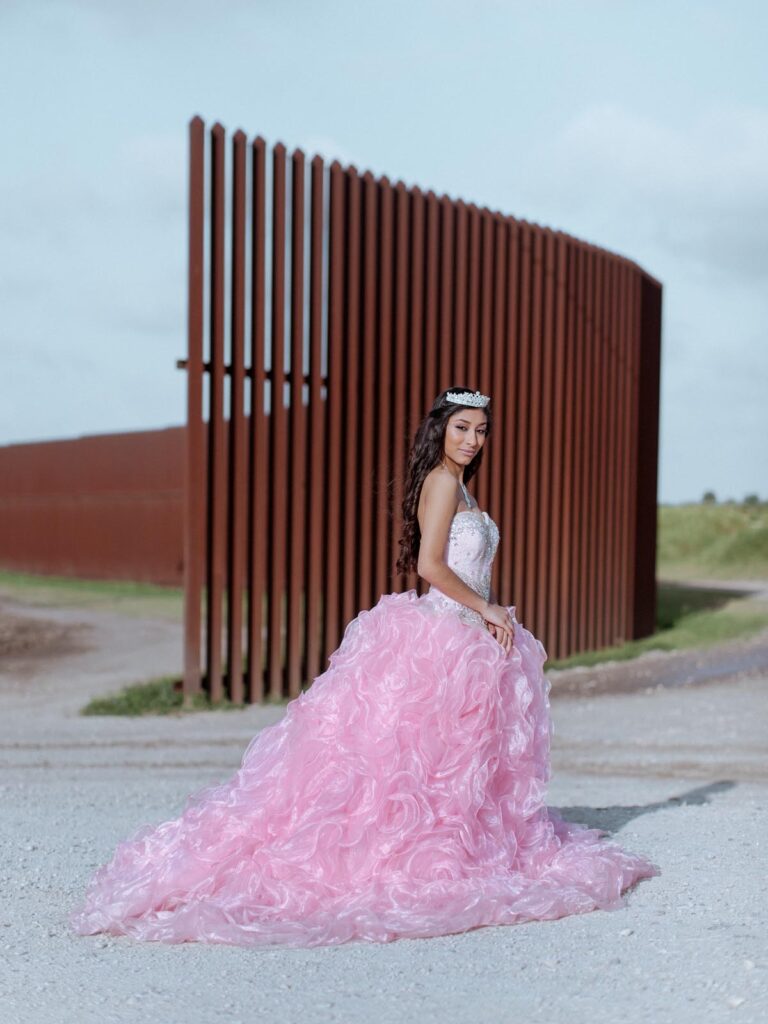
Jaymin Martinez, Brownsville, TX
When we met Jaymin Martinez, her quinceañera had been an extreme focal point of her young life for a matter of years. Months had passed since the party, but her pink tulle dress still hung in the center of her bedroom, animated by a teenager’s dreams and the occasional gust of wind. “I started very late,” Belinda Martinez said, admitting she began planning her daughter Jaymin’s quinceañera only nine months out. “People spend two, three, four years.” For even the humblest ceremony, there’s the venue, catering, dress, tiara, bouquet, toasting glasses, photographers, videographer, professional portrait, photo album, band, and decorated Hummer, limo, or truck.
Until the 1980s, this centuries-old celebration—primarily a Mexican girl’s rite of passage into womanhood on her 15th birthday—wasn’t widespread in Hispanic communities in the US. It was simply too expensive. Today, however, Hispanic consumers in the US have more purchasing power, and it’s increasing at a compound annual growth rate of 7.5 percent—more than twice as fast as the 2.8 percent growth for the total US. In the past five years alone, it has reached $1.38 trillion. As a result, the quinceañera business is a booming industry in South Texas. A party typically costs between $5,000 and $20,000.
One evening when we joined the Martinez family for homemade tacos, Jaymin told her parents, “I also want a sweet sixteen.” George, a soft-spoken hardware assistant at Lowe’s who takes a keen pride in his children, reminded her gently, “We’ll still be paying off your 15th.” In recent years, the Martinez family has faced several hardships—and still, they felt it was important to continue this Tejano tradition.
One block from the border fence, the Martinez home is tidily decorated with western-themed curios and family pictures. Out of the chaparral that buffers the street from the border fence, traffickers and smugglers regularly appear, even in broad daylight. “Spotters” for the cartel vigilantly patrol the street, as do Customs and Border Patrol, who many believe to be corrupt. “You just don’t know who you can trust,” George said, explaining why in his Brownsville community there was an aire of insularity even amongst neighbors and friends. The quinceañera had given the family a rare chance to bring family and friends together, honor a centuries-old tradition, and celebrate a fifteen-year old’s glowing, proud, and indomitable dreams.
Photograph by Elliot Ross, text by Genevieve Allison
Jaymin Martínez, Brownsville, TX
Cuando conocimos a Jaymin Martínez, su quinceañera había sido un punto extremadamente importante de su joven vida por cuestión de años. Habían pasado meses desde la fiesta, pero su vestido de tul rosa todavía colgaba en el centro de su habitación, animado por los sueños de una adolescente y la ocasional ráfaga de viento. “Comencé muy tarde”, dijo Belinda Martínez, admitiendo que comenzó a planear la quinceañera de su hija Jaymin solo nueve meses después. “La gente pasa dos, tres, cuatro años”. Incluso para la ceremonia más humilde, está el lugar, el catering, el vestido, la tiara, el ramo, los vasos de brindis, los fotógrafos, el camarógrafo, el retrato profesional, el álbum de fotos, la banda y el Hummer, la limusina o el camión decorados.
Hasta la década de 1980, esta celebración centenaria —principalmente el rito de paso de una niña mexicana a la feminidad en su 15º cumpleaños— no estaba muy extendida en las comunidades hispanas en los Estados Unidos. Simplemente era demasiado caro. Hoy, sin embargo, los consumidores hispanos en los EE. UU. Tienen más poder adquisitivo, y está aumentando la tasa de crecimiento anual compuesta del 7.5 por ciento, más del doble de rápido que el crecimiento total de los EE. UU. del 2.8 por ciento. Solo en los últimos cinco años, ha alcanzado $ 1,38 billones. Como resultado, el negocio de las quinceañeras es una industria en auge en el sur de Texas. Una fiesta generalmente cuesta entre $ 5,000 y $ 20,000.
Una noche, cuando nos unimos a la familia Martínez para comer tacos caseros, Jaymin les dijo a sus padres: “También quiero un dulce dieciséis”. George de voz suave y asistente de ferretería en Loewe, que se enorgullece profundamente de sus hijos, le recordó gentilmente: “Todavía pagaremos tu quinceañera”. En los últimos años, la familia Martínez ha enfrentado varias dificultades, y aun así, sintieron que era importante continuar con esta tradición Tejana.
A una cuadra de la cerca fronteriza, la casa de los Martínez está pulcramente decorada con curiosidades de temática occidental y fotos familiares. Fuera del chaparral que protege la calle de la valla fronteriza, aparecen regularmente traficantes y contrabandistas, incluso a plena luz del día. Los “observadores” del cartel patrullan vigilantes la calle, al igual que la Aduana y la Patrulla Fronteriza, que muchos consideran corruptos. “Simplemente no sabes en quién puedes confiar”, dijo George, explicando por qué en su comunidad de Brownsville había un aire de aislamiento incluso entre vecinos y amigos. La quinceañera le había dado a la familia una rara oportunidad de reunir a familiares y amigos, honrar una tradición centenaria y celebrar los sueños brillantes, orgullosos e indomables de una quinceañera.
Fotografía de Elliot Ross, texto de Genevieve Allison
ELLIOT ROSS
Elliot Ross is an internationally exhibited photographer based in Colorado with a BFA from the Savannah College of Art and Design. His work has been widely published, with notable appearances in National Geographic, TIME, The Guardian, Vice and The Atlantic. His work focuses on the American condition and human stories that explore spaces in transition. Among these ideas include projects that address the rapidly changing American arctic, the proliferation of surveillance, and the divisive nature of geopolitical borders including the plight of refugees seeking asylum in Europe and stories from marginalized American communities of the U.S. / Mexico borderlands.
Elliot Ross es un fotógrafo de exposición internacional basado en Colorado con un BFA del Savannah College of Art and Design. Su trabajo ha sido ampliamente publicado, con notables apariciones en National Geographic, TIME, The Guardian, Vice y The Atlantic. Su trabajo se centra en la condición americana y las historias humanas que exploran los espacios en transición. Entre estas ideas se incluyen proyectos que abordan los rápidos cambios del ártico americano, la proliferación de la vigilancia y la naturaleza divisoria de las fronteras geopolíticas, incluyendo la difícil situación de los refugiados que buscan asilo en Europa y las historias de las comunidades americanas marginadas de las tierras fronterizas entre Estados Unidos y México.