
Your cart is currently empty!
Cinthya Santos Briones
LIVING IN SANCTUARY
VIVIR EN EL SANTUARIO
Living in Sanctuary is a collaborative project that explores the links between the migration crisis and religious solidarity through photos, texts, drawings, archives and audio interviews. As religious leaders, faith communities, migrants, and refugee families are transforming sacred spaces, Cinthya Briones-Santos documents how the criminalization and persecution of migrants is changing the role of faith leaders, their institutions and communities.
Vivir en el santuario es un proyecto colaborativo que explora los vínculos entre la crisis migratoria y la solidaridad religiosa a través de fotos, textos, dibujos, archivos y entrevistas de audio. A medida que los líderes religiosos, las comunidades religiosas, los migrantes y las familias de refugiados, están transformando espacios sagrados, Cinthya Briones-Santos documenta cómo la criminalización y la persecución de los migrantes está cambiando el papel de los líderes religiosos, sus instituciones y comunidades.
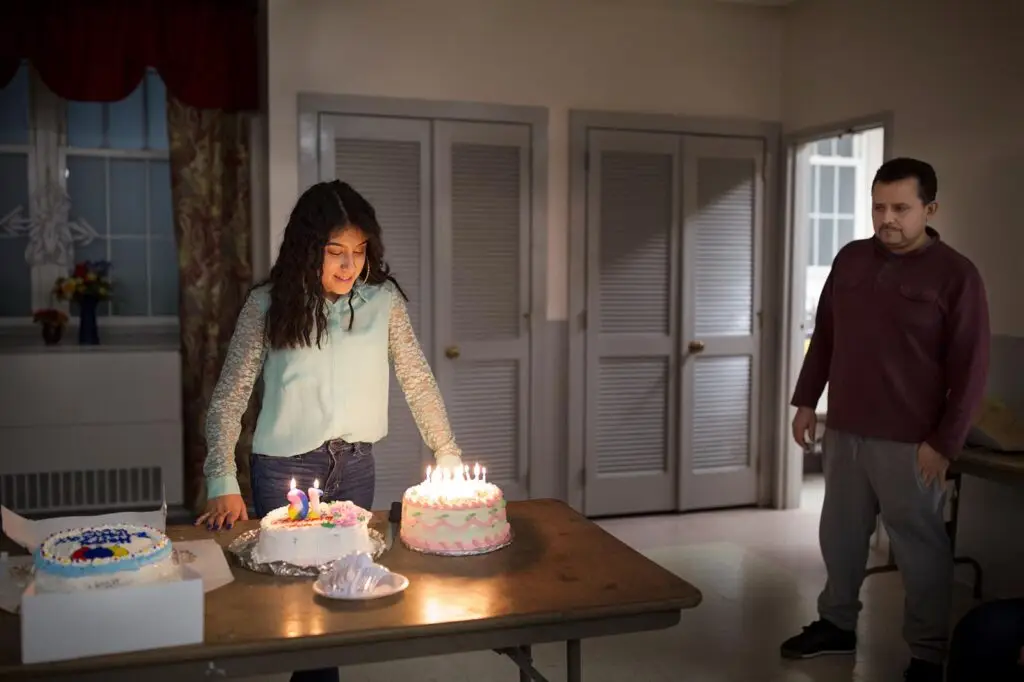
Kelly Pinos (left), celebrating her 16th birthday in the basement of the First and Summerfield United Methodist Church in New Haven, CT, where her father Nelson Pinos (right) has been in sanctuary since November 30, 2017 out of fear of being deported.
“A year ago we celebrated the 15th birthday of my daughter Kelly, in a big way, with a traditional quinceañera party.” Nelson says, “I hope to leave the church soon and that the immigration authorities will take away the deportation order so I can continue my life with my family.” New Haven, Connecticut, USA. February 23th, 2018.
Kelly Pinos (izquierda), celebrando su 16 cumpleaños en el sótano de la Iglesia Metodista Unida First y Summerfield en New Haven, CT, donde su padre Nelson Pinos (derecha) ha estado en santuario desde el 30 de noviembre de 2017 por temor a ser deportado.
“Hace un año celebramos el decimoquinto cumpleaños de mi hija Kelly, a lo grande, con una fiesta tradicional de quinceañeras”, dice Nelson. “Espero dejar la iglesia pronto y que las autoridades de inmigración retiren la orden de deportación para poder continuar mi vida con mi familia”. New Haven, Connecticut, Estados Unidos. 23 de febrero de 2018.
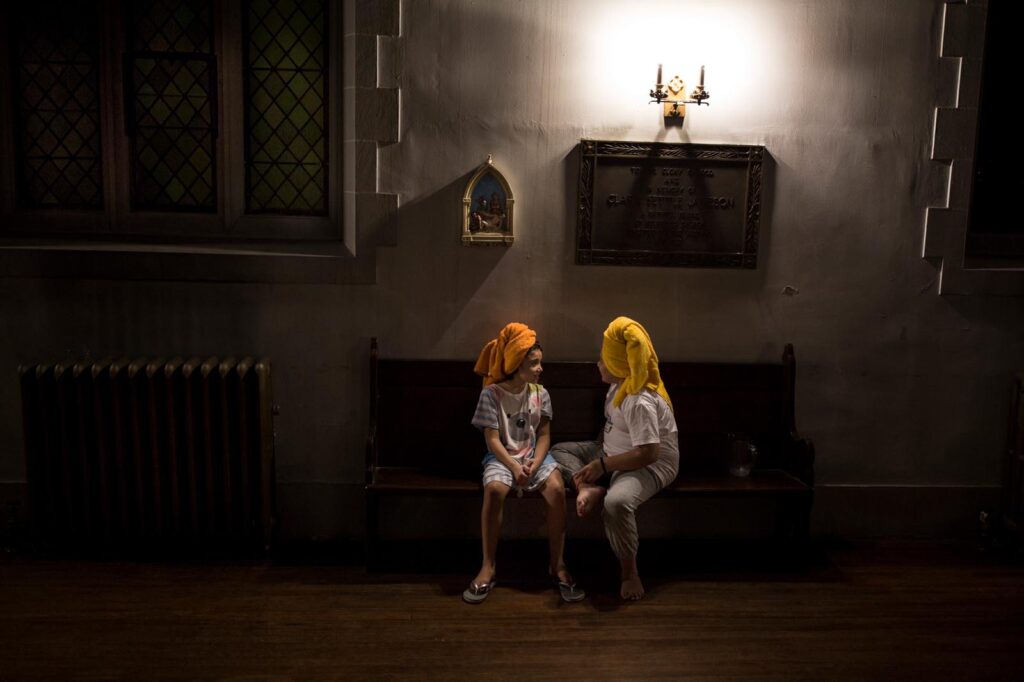
After an evening shower, Daniela, 9, (left) and her sister Dulce, 10, (right), wait for their hair to dry in a church pew. “We never thought of living in a church,” says Dulce. “I feel there are ghosts all around me and they see me. But I also like living here. It is a beautiful place.”
Daniela, Dulce, and their younger brother, David, live with their mother, Amanda morales, as refugees in the Episcopal Church of Holyrood in New York City, avoiding deportation back to Guatemala. Amanda was the first undocumented immigrant to take public sanctuary in the city of New York in three decades.
Después de una ducha vespertina, Daniela, de 9 años (izquierda) y su hermana Dulce, de 10 años (derecha), esperan que se les sequen el cabello en un banco de la iglesia. “Nunca pensamos en vivir en una iglesia”, dice Dulce. “Siento que hay fantasmas a mi alrededor y me ven. Pero también me gusta vivir aquí. Es un hermoso lugar.”
Daniela, Dulce y su hermano menor, David, viven con su madre, Amanda Morales, como refugiados en la Iglesia Episcopal de Holyrood en la ciudad de Nueva York, para evitar la deportación a Guatemala. Amanda fue la primera inmigrante indocumentada en tomar refugio público en la ciudad de Nueva York en tres décadas.
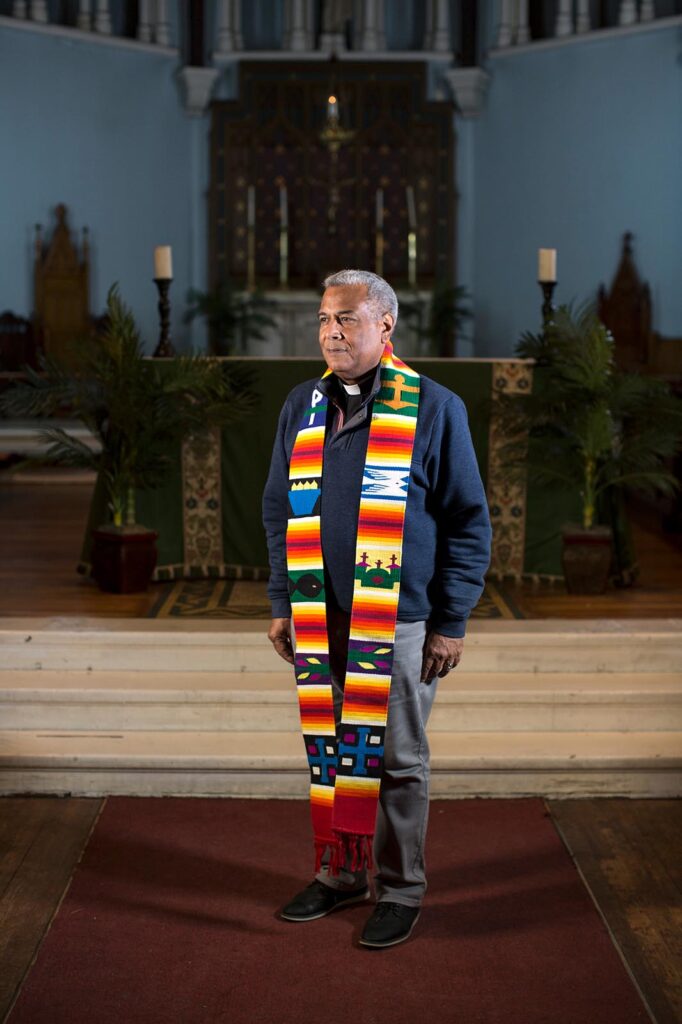
[Above] Pastor Luis barrios in his church at Holyrood Church in Washington Heights Manhattan. March, 2019.
[Arriba] El pastor Luis Barrios en su iglesia en Holyrood Church en Washington Heights Manhattan. Marzo de 2019.
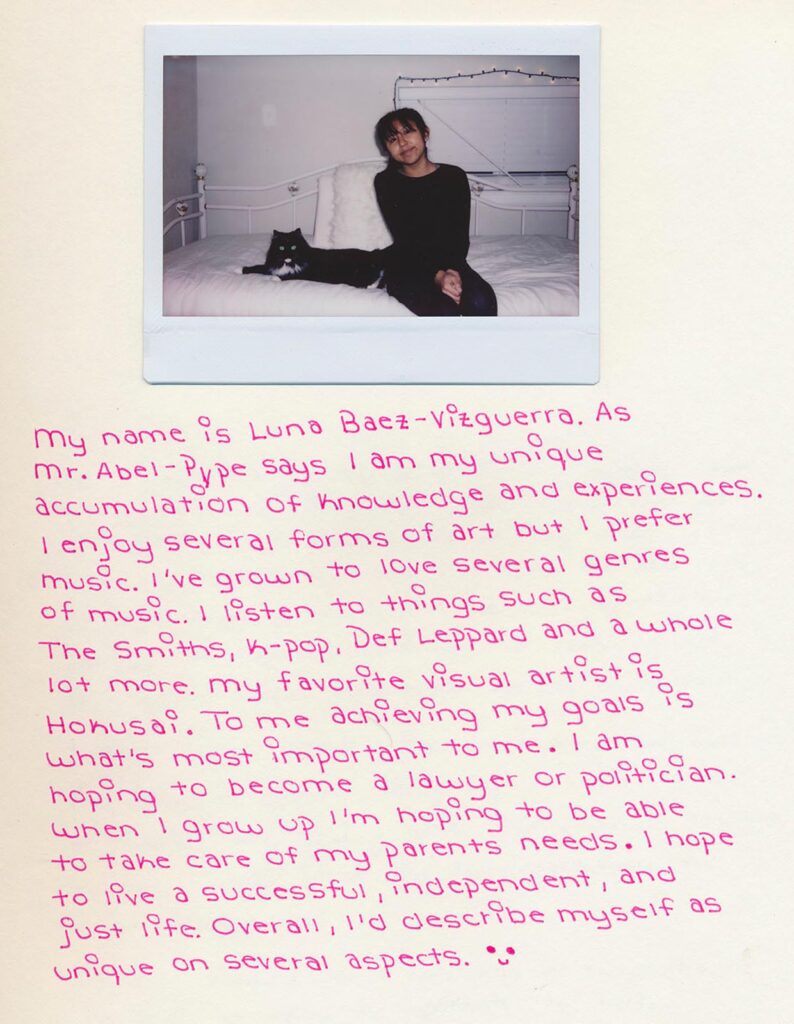
Refugee from Central America at Holy Cross Retreat Center at Las Cruces, New Mexico. December, 2018.
Refugiados de centroamérica en Holy Cross Retreat Center en Las Cruces, Nuevo México. Diciembre 2018.
Cinthya Santos Briones
Cinthya Santos Briones is a Mexican photographer, anthropologist, ethnohistorian and community organizer based in New York. Her multimedia work uses a collaborative approach to tell stories about homeland, immigration, memory, (indigenous) identity, and self-representation through an interdisciplinary process that uses photography, ethnography, (archives) history, drawings and audiovisual and written narratives.For ten years Cinthya worked as a researcher at the National Institute of Anthropology and History focused on issues on indigenous migration, codex, textiles and traditional medicine. She is the recipient of fellowships and grants from the Magnum Foundation (2016/2018), En Foco (2017), National Geographic Research and Exploration (2018), We Woman (2019) and the National Fund for Culture and the Arts of México (2009/2011). Her work has been published in The New York Times, Pdn, La Jornada, California Sunday Magazine, Vogue, Open Society Foundations, Buzzfeed, The Intercept and The Nation Magazine, among others.
Cinthya is co-author of the book “The Indigenous Worldview and its Representations in Textiles of the Nahua community of Santa Ana Tzacuala, Hidalgo”; and the documentary,The Huichapan Codex. Cinthya has worked in pro-immigrant organizations in New York as a community organizer and is currently Adjunct Faculty at the Craig Newmark Graduate School of Journalism at CUNY.
Cinthya Santos Briones es una fotógrafa, antropóloga, etnohistoriadora y organizadora comunitaria mexicana radicada en Nueva York. Su trabajo multimedia utiliza un enfoque colaborativo para contar historias sobre la patria, la inmigración, la memoria, la identidad (indígena) y la autorrepresentación a través de un proceso interdisciplinario que utiliza fotografía, etnografía, historia (archivos), dibujos y narrativas audiovisuales y escritas. Por 10 años Cinthya trabajó como investigadora en el Instituto Nacional de Antropología e Historia enfocada en temas de migración indígena, códice, textiles y medicina tradicional. Es beneficiaria de becas y subvenciones de la Fundación Magnum (2016/2018), En Foco (2017), National Geographic Research and Exploration (2018), We Woman (2019) y el Fondo Nacional para la Cultura y las Artes de México ( 2009/2011). Su trabajo ha sido publicado en The New York Times, Pdn, La Jornada, California Sunday Magazine, Vogue, Open Society Foundations, Buzzfeed, The Intercept y The Nation Magazine, entre otros.
Cinthya es coautora del libro “La cosmovisión indígena y sus representaciones en los textiles de la comunidad nahua de Santa Ana Tzacuala, Hidalgo”; y el documental The Huichapan Codex. Cinthya ha trabajado en organizaciones pro-inmigrantes en Nueva York como organizadora comunitaria y actualmente es profesora adjunta en la Escuela de Graduados de Periodismo Craig Newmark en CUNY.